

- All
- Be Lenka
- Biomecanics
- Bobux
- Bogs Boots
- Chipmunks Kids Footwear
- Froddo shoes
- Geox Kids Shoes
- Hush Puppies Childrens Shoes
- Lelli Kelly Girls Shoes
- Primigi Children's Shoes
- Reima Kids Footwear
- Ricosta Pepino Children's Shoes
- Shoe Care & Accessories
- Skechers Kids
- Slippers
- Start-Rite
- Superfit Shoes
- Term Footwear
- Wellingtons
- Plimsolls and PE Trainers
- Other Brands
Children's Barefoot Shoes
The idea behind Barefoot footwear comes from the acceptance that our feet evolved, over thousands of years, to be able to walk freely without any form of shoes at all. Therefore, whilst appreciating the benefits of protection, warmth, comfort and style that all forms of footwear can bring, barefoot shoes attempt to, at least partially, recreate natural freedom of movement in an unrestricted form.
There is, currently, no absolute description of what a barefoot shoe is, either for children or adults, but there are quite a few agreed upon values about what a barefoot shoe should, or shouldn’t, contain.
The phrase “barefoot” comes from providing the shoe wearer with a feeling that they are moving without anything on their feet. To replicate this feeling as much as possible a child’s barefoot shoe will usually have a very thin sole. The thickness of the sole can vary between many brands as they balance the needs of protecting children’s feet, which is especially important in all children’s shoes and not just barefoot, with maintaining the realistic feeling of the child’s feet walking, running and jumping on the ground. Whatever your preference is, the soles of barefoot shoes for children should feel flexible and lightweight.
Socks should generally still be worn in children’s barefoot shoes, unless the footwear contains any specific internal lining that would make them redundant, such as a cotton melange that you can find in some of our children’s shoe styles.
Kids’ barefoot shoes should provide the wearers with a feeling of freedom and should not restrict the feet. There will be no, or minimal, padding. This will allow your children’s feet to naturally support themselves. Also children’s barefoot shoes will often have a wide toe box (the area where the toes go) which will allow natural foot development. This does often mean that the front of the shoe will appear wider than the back, and will allow children’s toes to spread out naturally to assist with gripping the ground when they are moving around in exploring the world.
Another important characteristic of children’s barefoot shoes is that they do not have a raised heel, commonly referred to as zero drop as there is no drop in height from the front to the back of the shoe. The foot should remain flat in the shoe, which will enable your child’s feet to naturally support themselves, with their toes and heel being at the same height on the footbed, fractionally above the ground.
Are barefoot shoes right for your child? At Little Wanderers we have over 15 years of shoe fitting experience but we’re not medical professionals. Ultimately, it comes down to your choice to work out what you feel is best for your child’s development. We know podiatrists that suggest customers come to us for support in their children’s footwear, but this is to address specific issues in those children’s feet or walking movements. We would always suggest that if you have any concerns over your children’s movement or feet you speak with your G.P. or podiatrist. Most children begin the walking process without issue and we can certainly understand the logic that humans didn’t start to walk in footwear and have evolved accordingly. Therefore something that attempts to mimic this should not be a cause for concern. We also know of some podiatrist general approval for barefoot footwear.
So whose barefoot shoes should you choose for your child? Well each shoe maker will construe the requirements of barefoot in their own way and so we offer a selection of brands children’s barefoot styles. Since these children’s barefoot shoes are made by different manufacturers we are able to offer a wide choice of fit and differing widths. Providing your child’s barefoot shoes are secure at the ankle, with no unnecessary movement, any additional room in the shoe is to allow for natural growth and development.
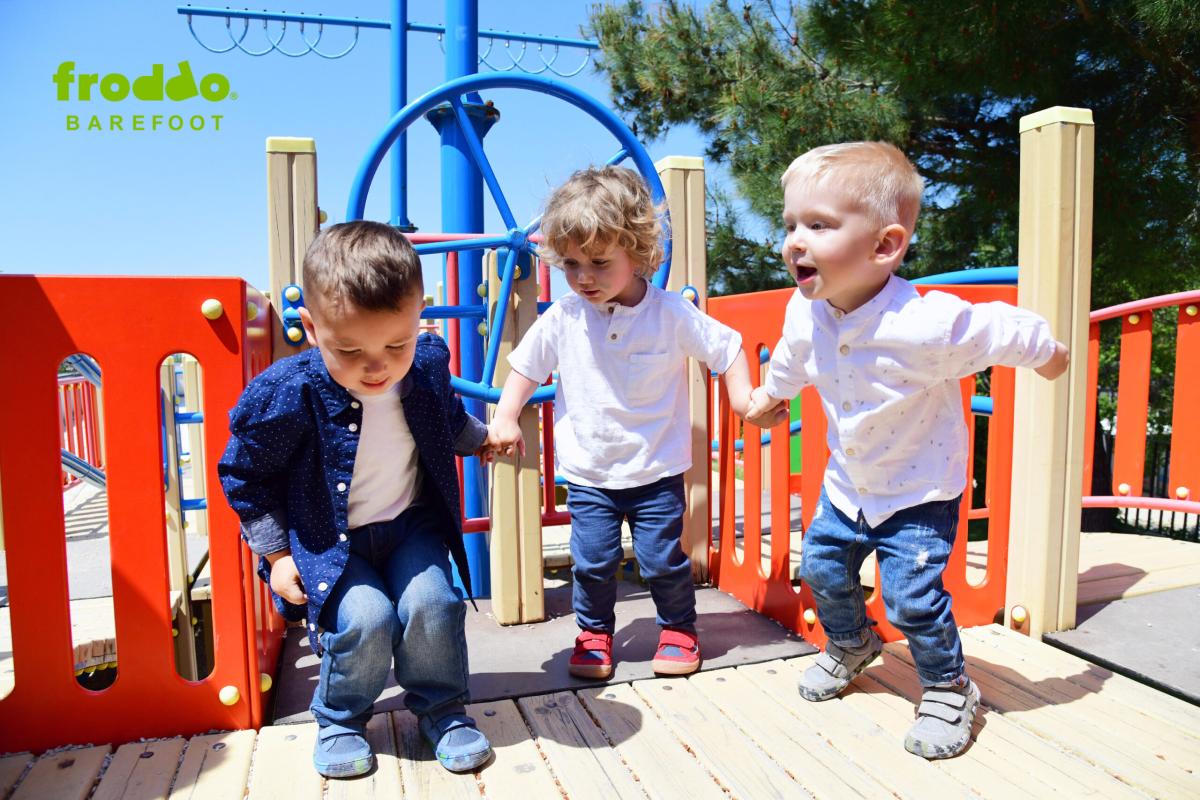
If you are familiar with certain brands then a good starting point may be to try these brands children’s barefoot offerings. A Froddo barefoot shoe will still be made with the same attention to detail as shoes from Froddo’s standard range and will still fit relatively the same. The main difference, from a fitting perspective, being less internal padding and a wider toe box area. The fit will still be, generally speaking, the same for the same size in barefoot as in their standard range. If you are a Superfit customer, which tend to fit slightly narrower anyway, then choosing a Superfit kids barefoot shoe will probably be a good option. Superfit barefoot footwear is still made using the WMS fitting system but the shoes are adapted to minimalize internal padding and provide for more width in the toe box area.
At present Little Wanderers is expanding the range of children’ barefoot shoes. We currently offer Froddo barefoot boots and shoes as well as Froddo barefoot school shoes. There are also kids’ barefoot footwear ranges from Superfit and Ricosta, where you can also find children’s barefoot trainers. Also a lot of the characteristics of children’s barefoot shoes can also be found in the whole of the Bobux range.